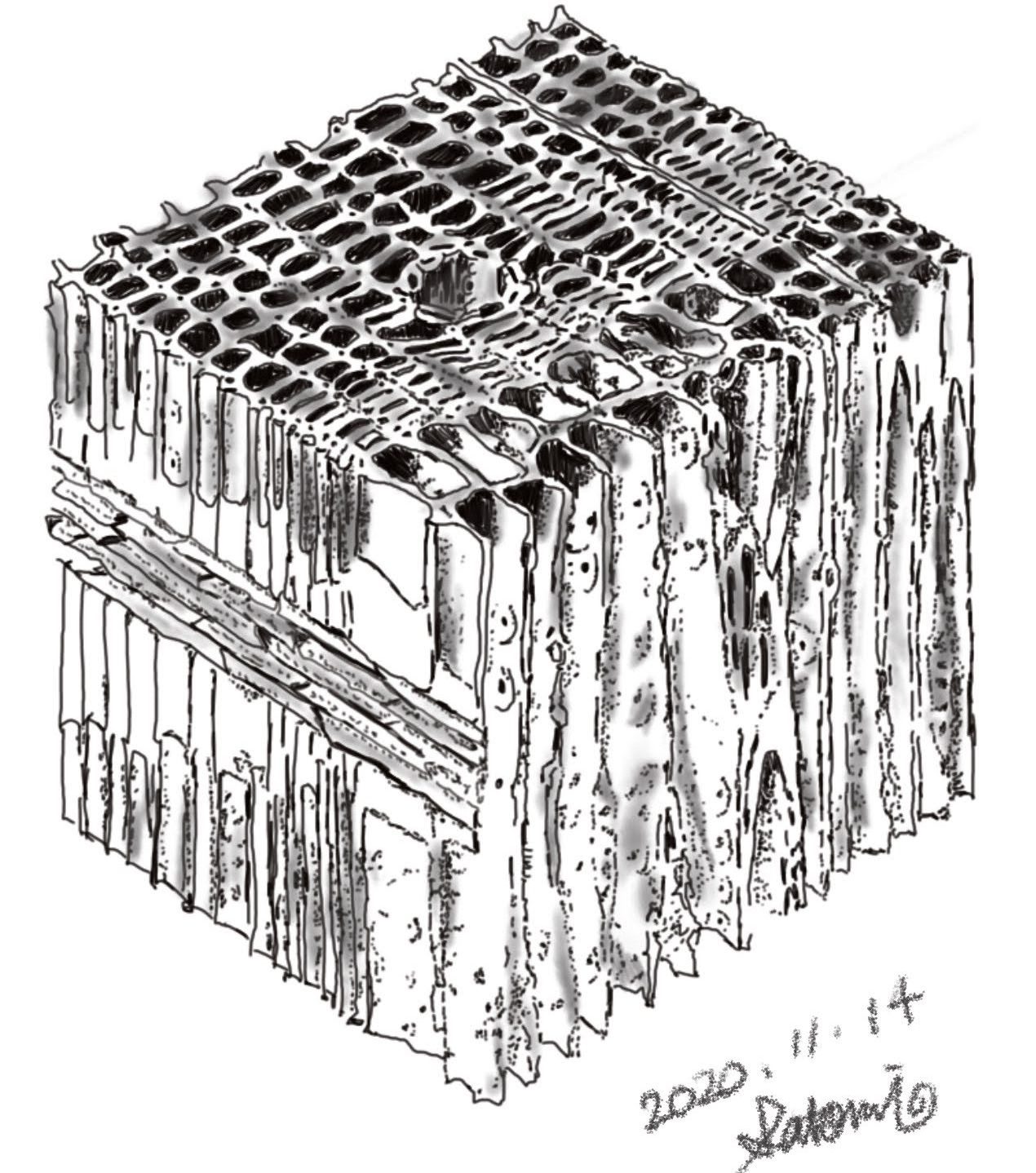

実はわたくし、趣味で水彩画を描いております。
これまであまり表に出すことがなかったのですが、ふと思い立って、少しずつご紹介してみようかなと思いました。
水彩画教室にも通っておりまして、師匠は竹内功先生。
竹内門下として、月に1〜3回ほど教室に通い、絵筆を動かしております。
モチーフに選ぶのは、樹木の組織構造など、自然の中にある「かたち」が多いです。アイキャッチ画像は猫さんです。
写実的な描写はあまり得意ではないので、どちらかというと抽象的な表現が中心になります。
※上に掲載している作品のほうが、古いものになります。
Actually, as a hobby, I paint watercolor artworks.
I haven’t shared much of my work publicly before, but recently I felt inspired to start introducing a few pieces little by little.
I also attend a watercolor class, where I study under Master Isao Takeuchi.
As one of his students, I join the class once to three times a month, quietly moving my brush.
My favorite motifs are often natural “forms,” such as the structures found in trees.
The cover image, however, is of a cat.
I’m not particularly skilled at photorealistic painting, so my work tends to lean more toward abstract expression.
The works displayed above are from earlier periods.
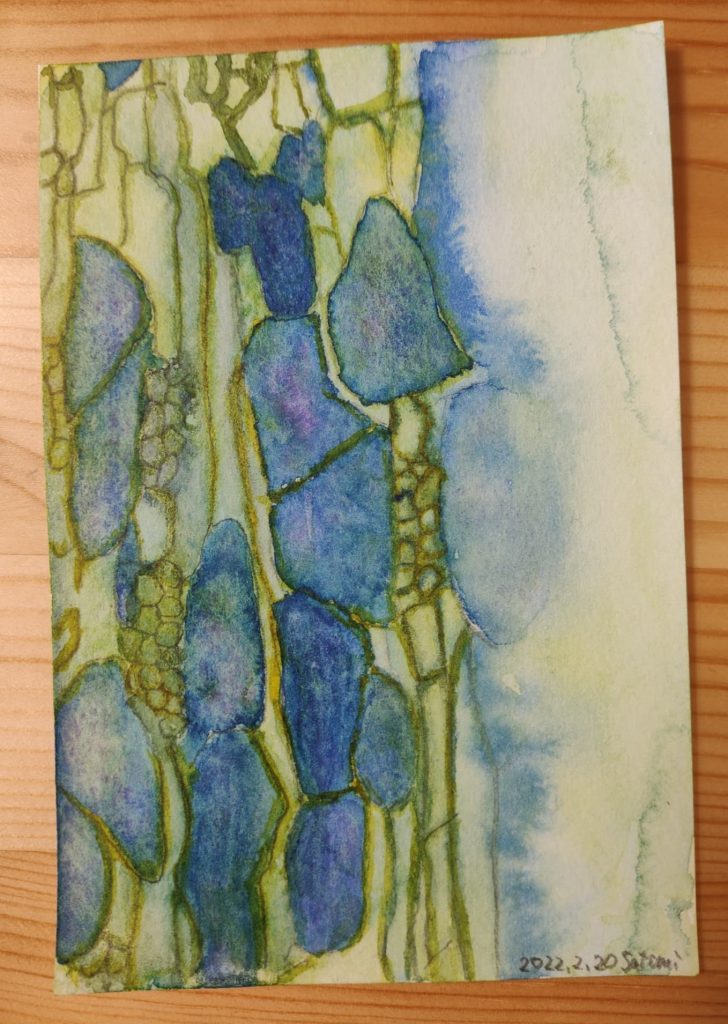
Although it’s an early piece, it has become one of my favorites.
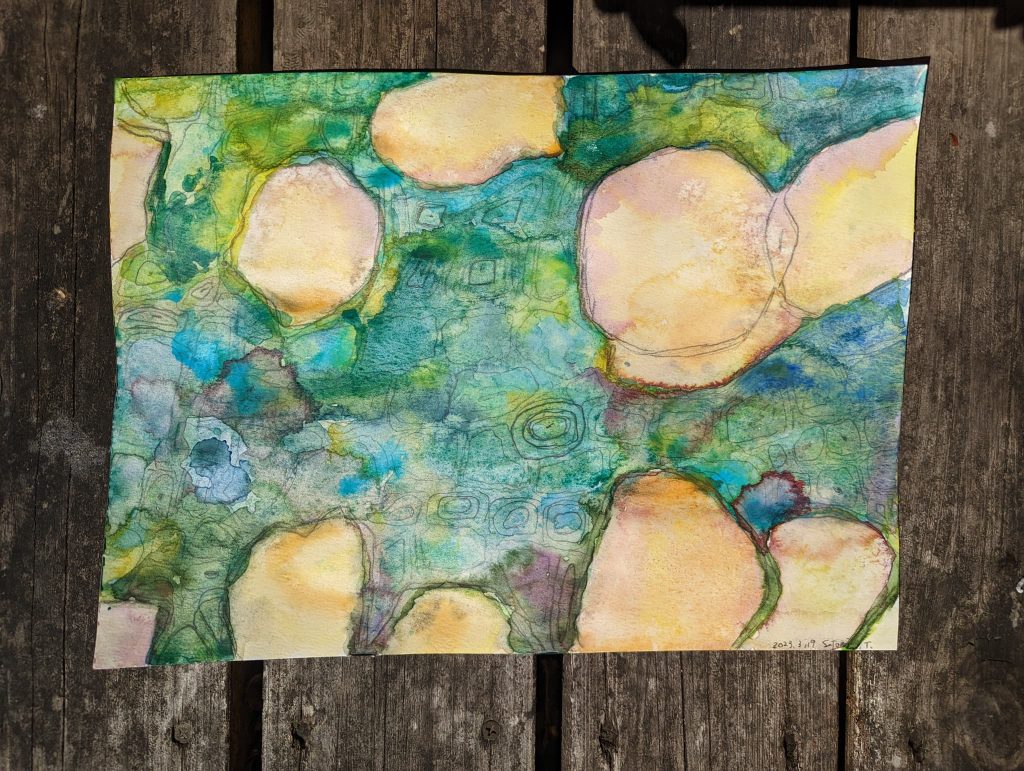
The colors turned out a bit muddy…
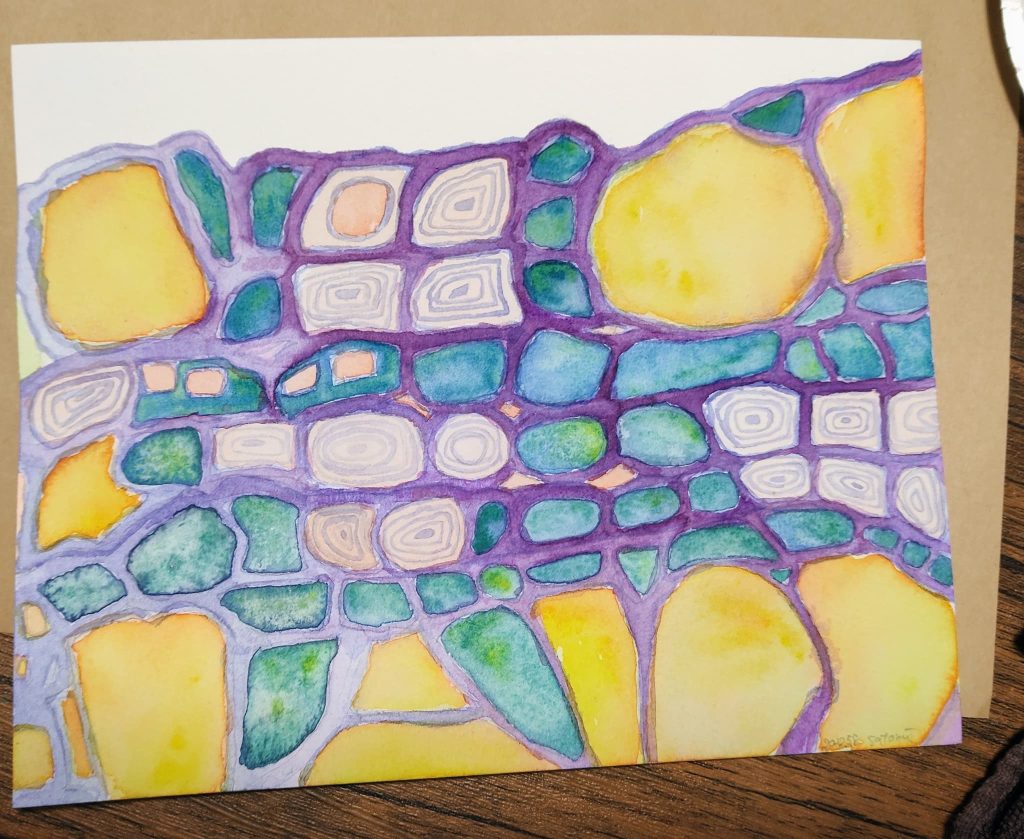
This might still be a work in progress.
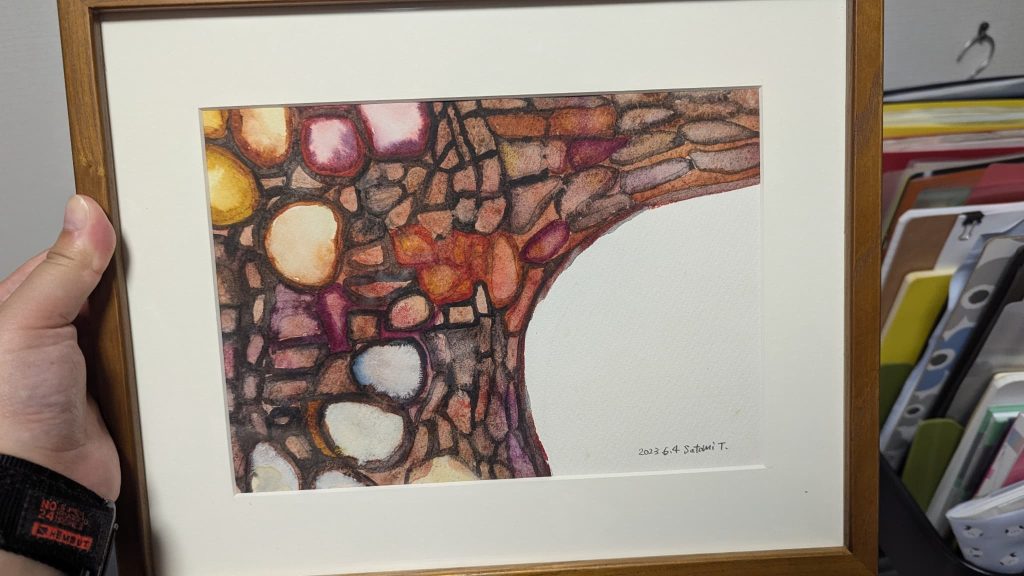
中でも特に気に入っている一枚を、東京農工大学で樹木組織学をご専門にされている船田先生にプレゼントさせていただきました🎁
先生にも喜んでいただけて、とても嬉しかったです。
Among my works, I gifted one of my favorites to Professor Funada, who specializes in tree anatomy at Tokyo University of Agriculture and Technology 🎁
I was truly happy that he liked it as well.
水彩画の魅力のひとつに、「紙の違いで絵がまったく変わる」という奥深さがあります。
同じ絵の具を使っても、紙によって色のにじみ方や広がり、境界の表情がまるで異なるのです。
私は普段、セルロース材料を研究している身ですが、
「この滲みや発色の違いって、紙のセルロース構造の違いが影響してるのでは?」とふと思ってしまいます。
芸術表現の背後にある素材の性質を考えると、アートとサイエンスがぐっと近づいてくるようでワクワクしませんか?
そのうち、本気で“水彩紙のセルロース構造と絵の表現性の相関”なんてテーマで研究してしまいそうです。笑
One of the fascinating aspects of watercolor painting is how profoundly the paper can change the artwork.
Even when using the same paints, the way the colors bleed, spread, and form edges can vary dramatically depending on the paper.
Since I usually conduct research on cellulose materials,
I can’t help but wonder — could these differences in how the paint behaves be influenced by variations in the cellulose structure of the paper?
When you think about the material properties behind artistic expression, doesn’t it make you feel that art and science are closely connected? It’s truly exciting!
At this rate, I might actually end up researching something like the relationship between cellulose structure in watercolor paper and artistic expression. 😄